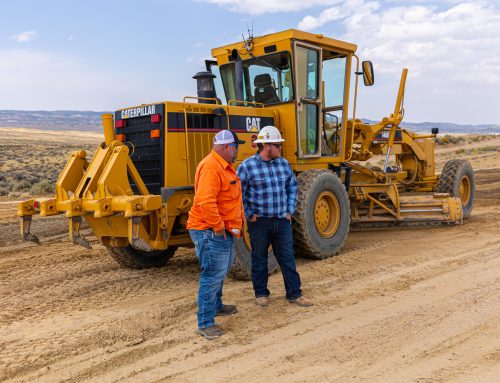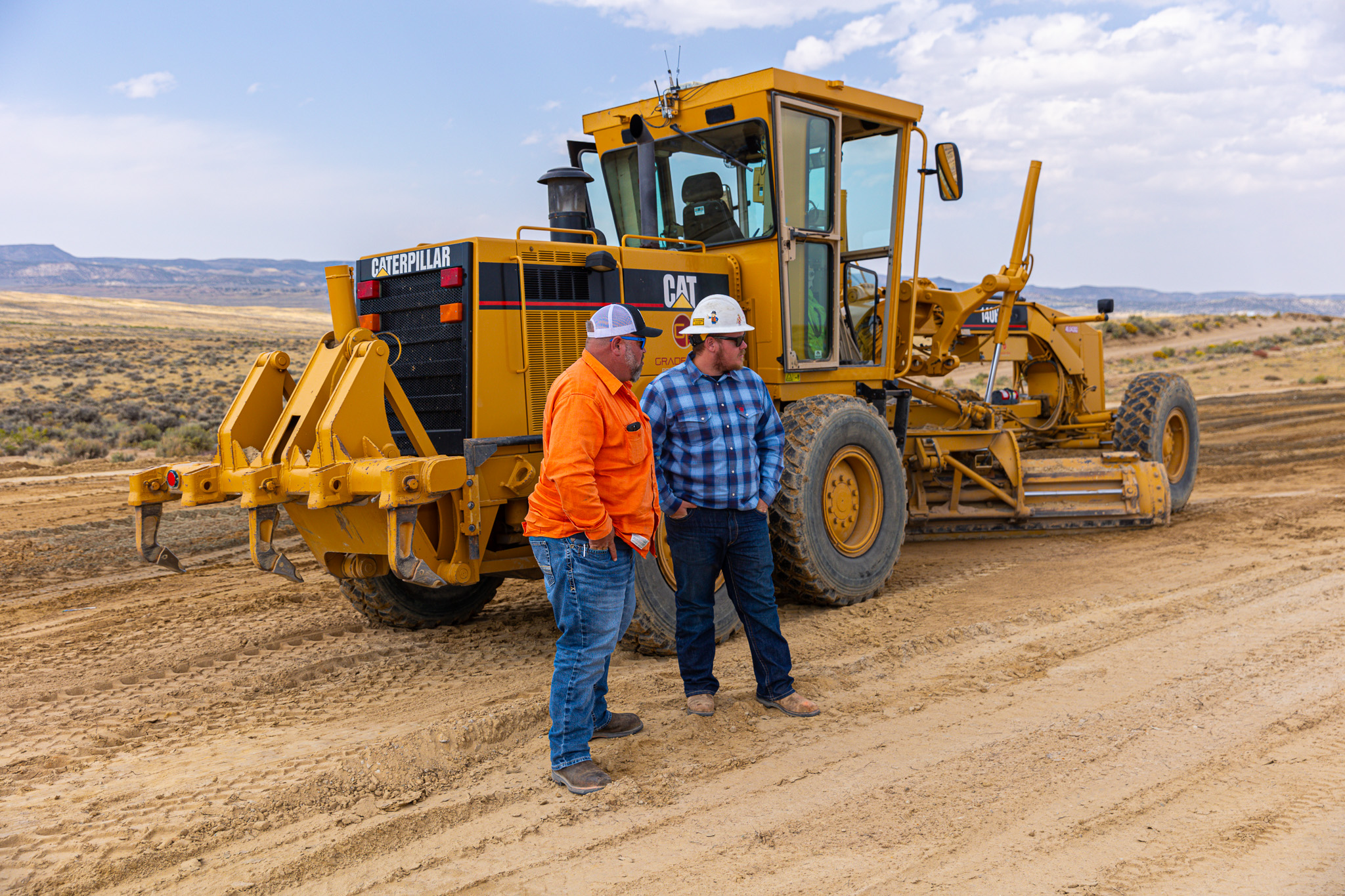
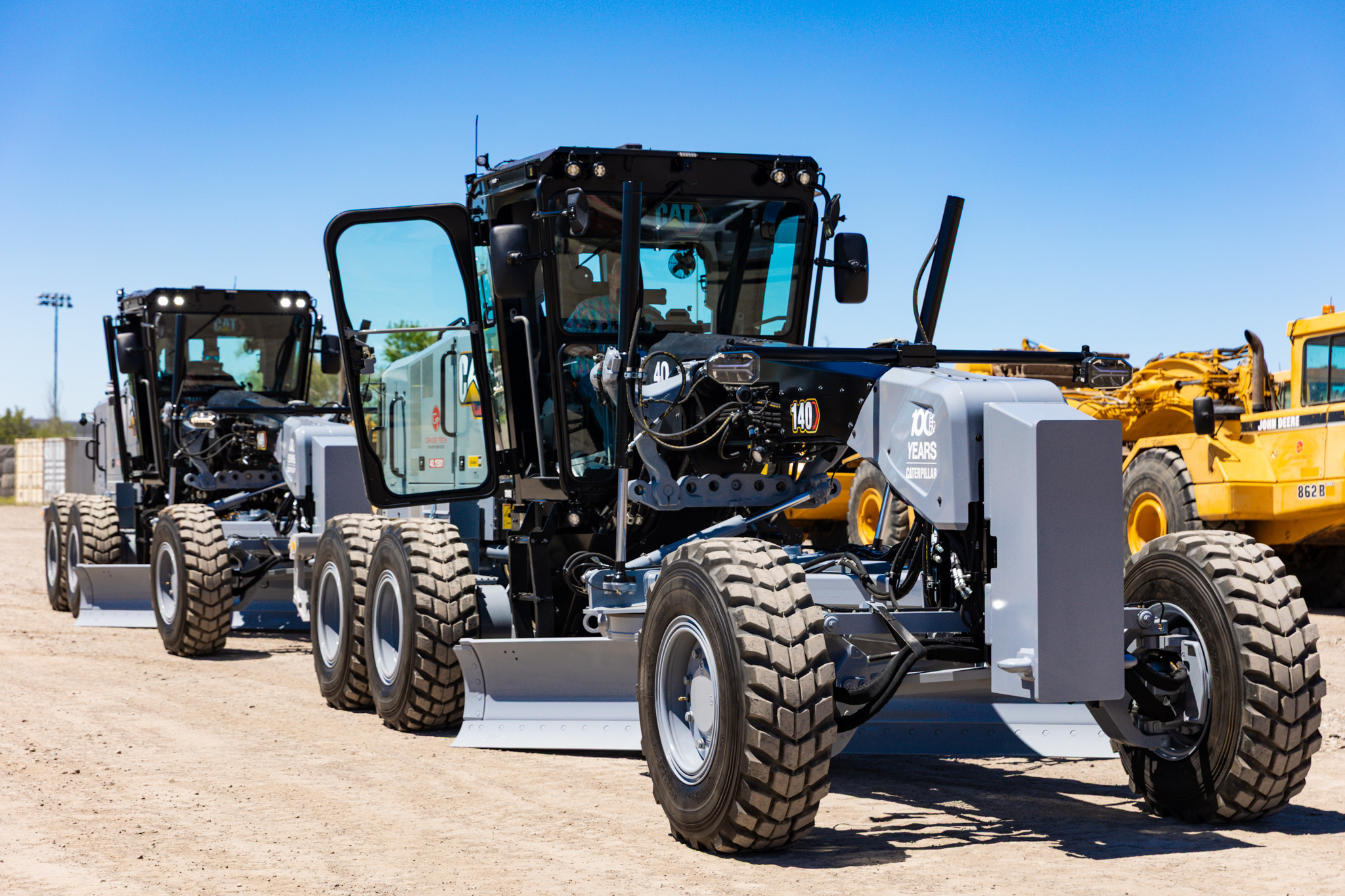
There is a lot of noise online right now about the two new additions to the Grade Tech fleet. Taking delivery of the first two next-gen Cat 140 LVR Graders caused a stir because of their distinctive Centennial Gray appearance. But if you talk to Rory, he will tell you plain and simple: the paint is not what makes these machines special.
Anyone can buy a factory blade, take it to a shop, and spray it gray. In fact, that is exactly what happened here. Our local dealer, Wheeler Machinery Co, custom-painted the machines in the historic 1925 gray and vintage red to deliver a world-class rollout experience.
The real story isn’t the paint. The real story is that these two machines are the first two next-generation, completely redesigned 140 LVR (Lever) motor graders to roll off the Caterpillar assembly line anywhere in the world.
The History: Why the Levers Came Back
To understand why these machines represent a massive shift in earthmoving history, you have to look at the timeline of the modern grader:
- 2007: Cat launched the M-Series, introducing joystick controls and moving away from traditional lever configurations.
- 2010–2012: Lever-control production ground to a halt as the industry pushed joysticks as the standard stocking option in North America.
- 2018: Listening to market demand, Cat reintroduced traditional steering-wheel and lever layouts on updated 120 and 140 platforms.
- 2025: Cat officially unveiled the ground-up, next-generation 140 LVR at the Public Works Expo (PWX).
- 2026: Full production launched, and Grade Tech secured the first two units ever built.
When Caterpillar originally eliminated levers in favor of full joysticks, they left a massive gap in the market. Competitors like John Deere and Komatsu continued to produce lever-operated machines, dominating that sector and capturing significant market share. Realizing that heavy civil operators demanded the precision of a traditional steering wheel and mechanical lever logic, Cat went back to the drawing board to build the ultimate lever machine.
At Grade Tech, choosing LVR over joysticks comes down to personal preference. We own a 150 joystick grader for the crew members who prefer that setup, but for our primary production, nothing matches the feel, control, and precision of a lever-operated machine.
From the Ground Up: Old 140M vs. New 2026 140 LVR
This is not a refresh or a facelift. Caterpillar completely redesigned this machine from the ground up, merging the heavy muscle of the proven 140M platform with modern excavator operator comfort, advanced GPS machine control, and mining-level electronics.
The fundamental differences between the older 140M series and the new 2026 140 LVR reveal how the machine has evolved into a precision digital grading platform:
| Feature | Older Cat 140M / M2 | New 2026 Cat 140 LVR |
| Cab Design | Industrial, tighter visibility | Completely redesigned next-gen cab |
| Visibility | Blind spots around moldboard/tandems | Larger windows, lower sightlines |
| HVAC | Louder, lower-mounted system | Quiet, roof-mounted brushless HVAC |
| Screen | Smaller, separate display monitors | Integrated 10-inch touchscreen |
| Rear Camera | Separate add-on monitor | Integrated HD camera system with People Detect |
| Transmission | 8-speed powershift | New 9-speed setup with a slower finish gear |
| Circle Design | Traditional circle shoes, shims, and wear strips | High Performance Circle (HPC) bearing-style |
| Circle Maintenance | Frequent manual adjustments and shimming | Near-zero adjustment on the sealed HPC assembly |
| Hydraulics | Traditional, abrupt response | Retuned, ultra-smooth precision hydraulics |
| GPS Integration | Aftermarket, add-on configuration | Built entirely around 2D/3D machine control |
| Stable Blade | Not available | Standard, automated operator-assist feature |
| Service Access | Scattered check points | Centralized, banked service points |
The Core Physical Transformations
When you look at the first two next-gen Cat 140 LVR Graders on the job site, three major physical innovations stand out from any grader that came before them.
1. The Cab Position, Glass, and Sloped Nose
The old 140M featured thick pillars and smaller windows, creating a tighter, more enclosed environment. The 2026 next-gen cab opens up the entire view with a massive glass area and repositioned pillars.
Caterpillar paired this glass with a radically sloped hood and nose design. By dropping the profile of the nose, operators get a completely unobstructed line of sight to the articulation area and the front corners of the blade.
2. The High Performance Circle (HPC)
Underneath the machine, the mechanical layout has changed completely. Traditional grader circles rely on wear strips, shoes, and shims that constantly develop slop, chatter under heavy loads, and demand regular teardowns for manual adjustment.
The 2026 140 LVR features an excavator-bearing-inspired High Performance Circle. This sealed, bearing-style design completely encloses the gear teeth, ensuring tighter tolerances, absolute rigidity under pressure, and near-zero ongoing maintenance adjustments.
3. Deep Technology Integration
On older M-Series machines, GPS, sensors, and displays felt like aftermarket components bolted onto an analog machine. The 2026 next-gen platform was designed from its inception around digital workflows. The transmission, the retuned hydraulics, the IMU sensors, and the mastless 3D grading software are hardwired into a singular operating system.
The Real-World Difference in the Seat
Sitting in an older 140M feels like operating a traditional, heavy, mechanical grader. It is raw and capable, but it requires constant manual compensation from the operator.
Operating the 2026 140 LVR feels like stepping into a modern, refined, precision instrument. It marks the exact moment motor graders undergo the transformation that excavators did a few years ago—moving from basic hydraulic machines to highly integrated, operator-assist digital platforms.
As Grade Tech tackles the massive surge of data center developments, substation installations, and power grid expansions across Utah, Nevada, and Wyoming, we aren’t just bringing manpower to the dirt world. We are deploying the first two next-generation grading platforms ever built to deliver unmatched technical accuracy for our clients.